The Asana Exodus: Why European Teams Are Taking Back Control of Their Projects
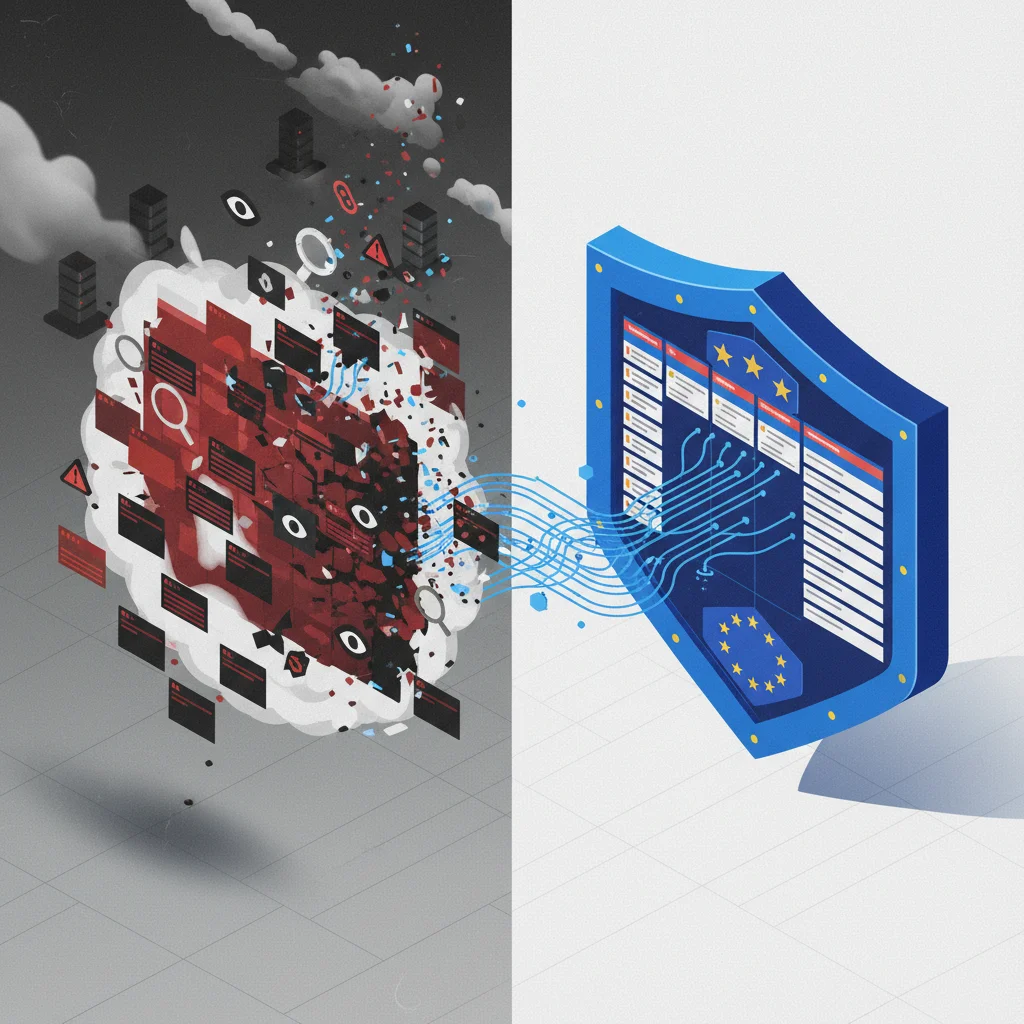
Your project timelines, client names, and strategic plans are sitting on US servers. 92% of European cloud is controlled by non-EU players. Here's why teams are switching -and where they're going.
Open source, self-hostable, Gantt charts, time tracking, full control
Try OpenProject →Beautiful Kanban boards, automation, German servers
Try MeisterTask →92% of the European cloud market is controlled by non-European companies.
Read that again. Ninety-two percent.
Your project timelines. Your client names. Your budget allocations. Your strategic initiatives. Your team’s private comments about that difficult stakeholder. All of it flows through servers in Virginia, Oregon, or California -subject to laws written by people who never heard of GDPR.
The hidden cost of “free” tiers: Asana’s free plan stores your data in US data centers with no option for EU residency. Even paid plans require Enterprise (custom pricing) for EU data residency. You’re not the customer -you’re the product whose project data trains AI models and feeds analytics systems.
This isn’t about paranoia. It’s about asking a simple question: Why should your European company’s strategic plans be governed by US law?
The Data You’re Exposing
Here’s what lives inside your project management tool:
| Data Type | Risk Level | Why It Matters |
|---|---|---|
| Project names | Medium | Reveals strategic initiatives, M&A targets, product roadmaps |
| Client names | High | Confidential business relationships exposed |
| Team comments | High | Unfiltered opinions, internal disputes, candid feedback |
| Timelines | Medium | Reveals capacity, bottlenecks, business priorities |
| File attachments | Critical | Contracts, proposals, financial docs |
| Time tracking | Medium | Employee performance data, billing rates |
When you use Asana, Monday.com, or Notion, this data sits on US servers. Under the CLOUD Act (2018), US authorities can compel American companies to hand over data -even if it’s stored in EU data centers. The company doesn’t have to tell you.
The EU Data Residency Trap
Asana offers “EU data residency.” Sounds good, right?
Here’s what they don’t advertise:
- Only available on Enterprise plans (custom pricing, typically €20+/user/month)
- You have to specifically request it
- Metadata and backups may still route through US
- As a US company, they’re still subject to CLOUD Act regardless of where data sits
The bottom line: EU data residency from a US company is a checkbox, not a solution.
The EU Alternatives
European project management tools have matured significantly. You’re no longer choosing between “privacy” and “features” -you can have both.
Feature Comparison
| Feature | 🇩🇪 OpenProject | 🇩🇪 MeisterTask | 🇪🇸 Taiga | 🇩🇪 Zenkit |
|---|---|---|---|---|
| HQ | Berlin | Munich | Madrid | Karlsruhe |
| Founded | 2012 | 2015 | 2014 | 2016 |
| Open Source | ✅ Yes | ❌ No | ✅ Yes | ❌ No |
| Self-Host | ✅ Yes | ❌ No | ✅ Yes | ❌ No |
| Free Tier | ✅ Community | ✅ 3 projects | ✅ Unlimited | ✅ Limited |
| Kanban | ✅ | ✅ | ✅ | ✅ |
| Gantt Charts | ✅ | ⚠️ Timeline only | ❌ | ❌ |
| Scrum/Sprints | ✅ | ❌ | ✅ Native | ❌ |
| Time Tracking | ✅ | ✅ | ❌ | ⚠️ Via integration |
| Price/User/Mo | €0-7.25 | €0-14.50 | €0-5 | €0-25 |
| Best For | Enterprise | Visual teams | Agile teams | Flexibility |
🇩🇪 OpenProject - The Enterprise Powerhouse
Why it wins: OpenProject is what Asana would be if it were built by Germans who took data sovereignty seriously. Enterprise features without the enterprise lock-in.
Killer feature: True Gantt charts with dependencies, baselines, and critical path. Most EU alternatives skip this - OpenProject delivers it.
The German government uses it. Siemens uses it. Audi uses it. When organizations that handle actual sensitive data choose a PM tool, they choose OpenProject.
| Pros | Cons |
|---|---|
| ✅ Full Asana feature parity (and more) | ⚠️ Steeper learning curve |
| ✅ Self-host option for complete control | ⚠️ UI less polished than Asana |
| ✅ Gantt, agile, and hybrid workflows | ⚠️ Mobile apps lag behind |
| ✅ Time tracking, budgets, costs built-in | |
| ✅ Direct Asana import available |
→ Try OpenProject free (Community edition, unlimited users)
🇩🇪 MeisterTask - The Beautiful One
Why it wins: If your team fell in love with Trello’s visual simplicity but needs something more powerful, MeisterTask is the answer. German engineering meets design thinking.
Killer feature: Automations that actually work. When a task moves to “Done,” automatically assign the next task, update due dates, and notify stakeholders -no Zapier required.
MeisterTask is from the same company that makes MindMeister (mind mapping). The integration between brainstorming and execution works beautifully.
| Pros | Cons |
|---|---|
| ✅ Gorgeous, intuitive interface | ⚠️ No self-hosting option |
| ✅ Powerful automations included | ⚠️ Limited reporting |
| ✅ German data centers by default | ⚠️ No native Gantt charts |
| ✅ Excellent mobile apps |
→ Try MeisterTask free (up to 3 projects)
🇪🇸 Taiga - The Developer’s Choice
Why it wins: Built by developers who were frustrated with PM tools that didn’t understand agile. Taiga speaks Scrum and Kanban natively -not as an afterthought.
Killer feature: User story mapping. Plan your product backlog visually, then break stories into tasks and track them through sprints. Jira-level functionality without the Jira complexity.
The Spanish government funded its initial development. Now it’s used by development teams at companies that actually ship software.
| Pros | Cons |
|---|---|
| ✅ Native Scrum/Kanban | ⚠️ No mobile apps (web responsive) |
| ✅ Unlimited users on self-hosted | ⚠️ Developer-focused (not for everyone) |
| ✅ Beautiful, modern UI | ⚠️ Limited integrations |
| ✅ User stories, epics, sprints | |
| ✅ Open source, audit the code |
→ Try Taiga free (unlimited projects and users)
🇩🇪 Zenkit - The Shape-Shifter
Why it wins: Can’t decide between Kanban, lists, tables, calendars, or mind maps? Zenkit doesn’t make you choose. Switch views instantly, same data.
Killer feature: Six views of the same data. Start planning in mind map view, switch to Kanban for execution, view deadlines in calendar, analyze in table. Your data adapts to your thinking style.
If your team has people who think differently - some visual, some list-oriented, some calendar-driven - Zenkit lets everyone work their way.
| Pros | Cons |
|---|---|
| ✅ Incredible view flexibility | ⚠️ Can be overwhelming at first |
| ✅ German hosting by default | ⚠️ No self-hosting |
| ✅ Mind map integration | ⚠️ Less powerful than specialists |
| ✅ Good free tier |
→ Try Zenkit free (limited items)
Which Should You Choose?
| Your Situation | Best Choice | Why |
|---|---|---|
| 🏢 Enterprise with compliance needs | OpenProject | Self-host, audit trails, Gantt charts, budgets |
| 🎨 Visual/creative team | MeisterTask | Beautiful boards, automations, low learning curve |
| 💻 Development team (Scrum/Kanban) | Taiga | Native agile, user stories, sprints, free unlimited |
| 🔄 Team with mixed work styles | Zenkit | Six views, adapts to everyone |
| 💰 Budget-conscious | OpenProject Community / Taiga | Free, unlimited, self-hostable |
| 🔒 Maximum data control | OpenProject / Taiga | Open source + self-host |
The Migration Playbook
Switching project management tools is 20% technical, 80% human. Here’s how to do it right.
Week 1: Preparation
-
Export your data from Asana
- Projects → Export as CSV
- Attachments → Download manually (Asana doesn’t bulk-export files)
- Document your custom fields, automations, and workflows
-
Choose your tool based on the matrix above
-
Set up a pilot project
- Don’t migrate everything at once
- Pick one non-critical project to test
Week 2: Pilot Migration
-
Import test data
- OpenProject: Settings → Import → Asana (direct import available)
- Others: Use CSV import
-
Rebuild your workflow
- Custom fields may need recreation
- Automations need rebuilding (they don’t transfer)
-
Test with 2-3 team members
- Document pain points
- Create an FAQ for the full team
Week 3-4: Full Rollout
-
Migrate remaining projects
- Work project by project, not all at once
- Keep Asana read-only for reference (don’t delete yet)
-
Team training
- 30-min walkthrough for basics
- Written guide for your specific workflows
- Designate a “champion” for questions
-
Set the switch date
- “After Friday, all new work goes in [new tool]”
- Clean break works better than gradual migration
Common Migration Mistakes
| Mistake | What Happens | Prevention |
|---|---|---|
| Migrating everything at once | Chaos, lost data | Start with 1-2 projects |
| Skipping training | Team reverts to old habits | 30-min mandatory session |
| Keeping both tools “just in case” | Confusion about source of truth | Hard cutoff date |
| Expecting identical workflows | Frustration | Adapt to new tool’s strengths |
When to Stay, When to Go
Stay with Asana if:
- You’re on Enterprise with EU data residency already enabled and paid
- Your team has 100+ people with complex workflows that work
- You’re in a regulated industry where “we use Asana” satisfies auditors
- Migration cost outweighs privacy concerns for your specific situation
Switch to EU alternatives if:
- You’re starting a new company or project (no migration needed)
- You handle sensitive client data (consulting, legal, healthcare)
- Your enterprise plan is up for renewal (perfect timing)
- You’re in a regulated industry where US data storage is actually a problem
- You’re tired of paying extra for EU data residency
The Real Cost Comparison
Let’s compare annual costs for a 20-person team:
| Tool | Monthly/User | Annual (20 users) | Notes |
|---|---|---|---|
 🇺🇸Asana Premium 🇺🇸Asana Premium | €10.99 | €2,638 | No EU residency |
| 🇺🇸Asana Enterprise | ~€24+ | €5,760+ | Required for EU residency |
 🇩🇪OpenProject Cloud 🇩🇪OpenProject Cloud | €7.25 | €1,740 | EU by default |
 🇩🇪MeisterTask Pro 🇩🇪MeisterTask Pro | €8.25 | €1,980 | EU by default |
 🇪🇸Taiga Cloud 🇪🇸Taiga Cloud | €5 | €1,200 | EU by default |
| 🇩🇪OpenProject Self-Host | €0 | €0 | Your servers |
| 🇪🇸Taiga Self-Host | €0 | €0 | Your servers |
Savings switching from Asana Enterprise to OpenProject Cloud: €4,020/year
That’s not a cost -that’s a budget for an actual employee, or three months of a junior developer.
FAQ
Is Asana GDPR compliant?
Asana claims GDPR compliance, but EU data residency is only available as a paid add-on for Enterprise plans. Standard plans store data in US data centers, subject to US laws including the CLOUD Act. For true GDPR compliance with EU data residency, consider European alternatives like OpenProject or MeisterTask.
What’s the best EU alternative to Asana?
It depends on your needs. OpenProject (Germany) is best for enterprise features and self-hosting. MeisterTask (Germany) excels at visual Kanban workflows. Taiga (Spain) is ideal for agile/Scrum teams. All offer EU data residency by default, not as an expensive add-on.
Can I migrate my projects from Asana to an EU tool?
Yes. Most EU alternatives support CSV import. OpenProject offers direct Asana import. Taiga has an Asana migration guide. Plan 2-4 weeks for a full team migration including workflow adaptation. The hardest part isn’t the data -it’s changing habits.
Is self-hosted project management worth it?
For organizations with strict data requirements, absolutely. OpenProject and Taiga offer full self-hosting. You control the servers, the backups, the access. No third party ever sees your project data. For smaller teams, EU-hosted cloud solutions like MeisterTask or awork offer the same data protection with less IT overhead.